

Data Loss Prevention Is Not Dead. The Promise Behind It Is.

For more than two decades, cybersecurity programs have been built around a central objective: protect the data.
That objective has shaped nearly every major security investment. Organizations deployed encryption, access controls, data classification, rights management, endpoint controls, network monitoring, and Data Loss Prevention technologies with the expectation that sensitive information could be identified, governed, and prevented from leaving authorized environments.
The objective remains valid. The assumption behind it is becoming increasingly difficult to defend.
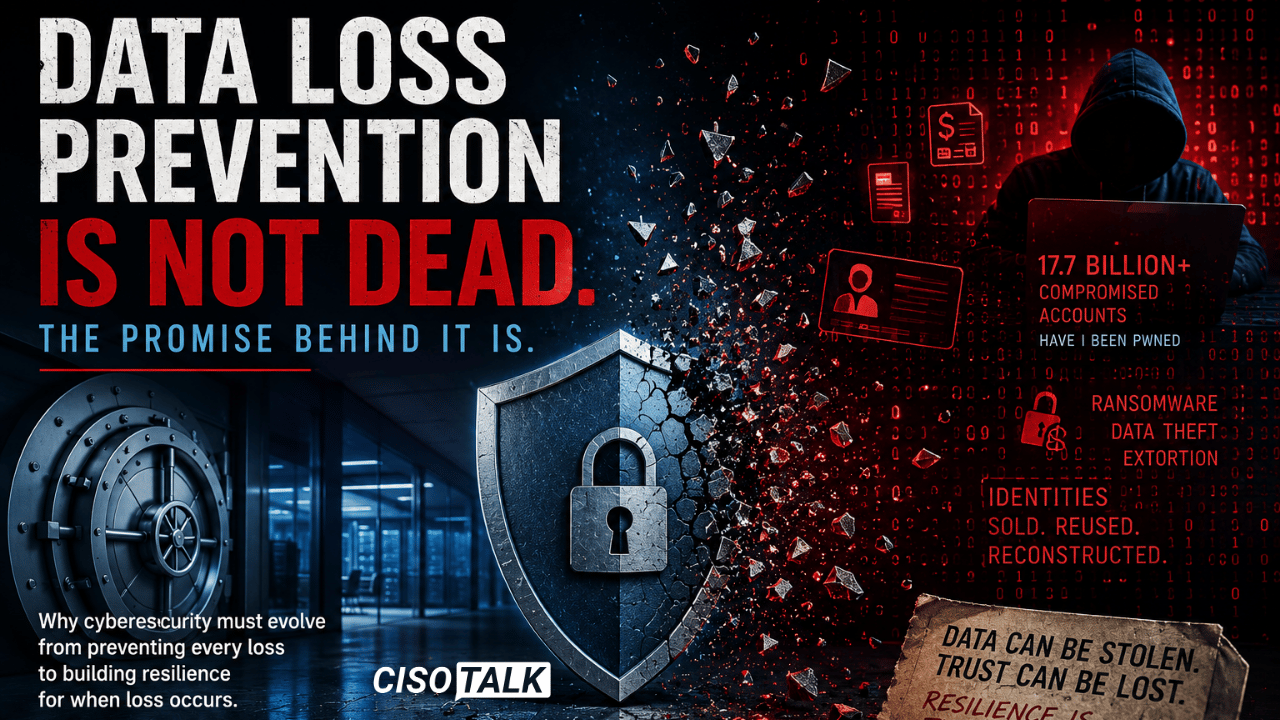
The modern enterprise no longer operates within a clearly defined perimeter. Sensitive information moves continuously across cloud platforms, software-as-a-service applications, collaboration tools, mobile devices, APIs, third-party providers, personal devices, and generative AI systems. At the same time, threat actors have changed how they monetize access. They no longer need to encrypt infrastructure or disrupt operations to create leverage. In many cases, stealing the data is sufficient.
This requires cybersecurity leaders to confront an uncomfortable question: is preventing data loss still a realistic primary objective, or has the industry reached the point where it must place equal emphasis on surviving the loss of confidentiality?
