



☕ Good Morning Security Gang,
Today’s episode is absolutely loaded, this is one of those “everything is breaking at once” kind of days.
We’ve got a national identity breach, an AI sandbox escape, a Microsoft emergency patch, Mirai botnets, a self-propagating npm worm, an APT abusing Outlook for command-and-control, and more.
If there’s one theme across every story today, it’s this:
👉 The systems we trust to prove identity and enforce boundaries are failing.
Double espresso in hand—let’s get into it.
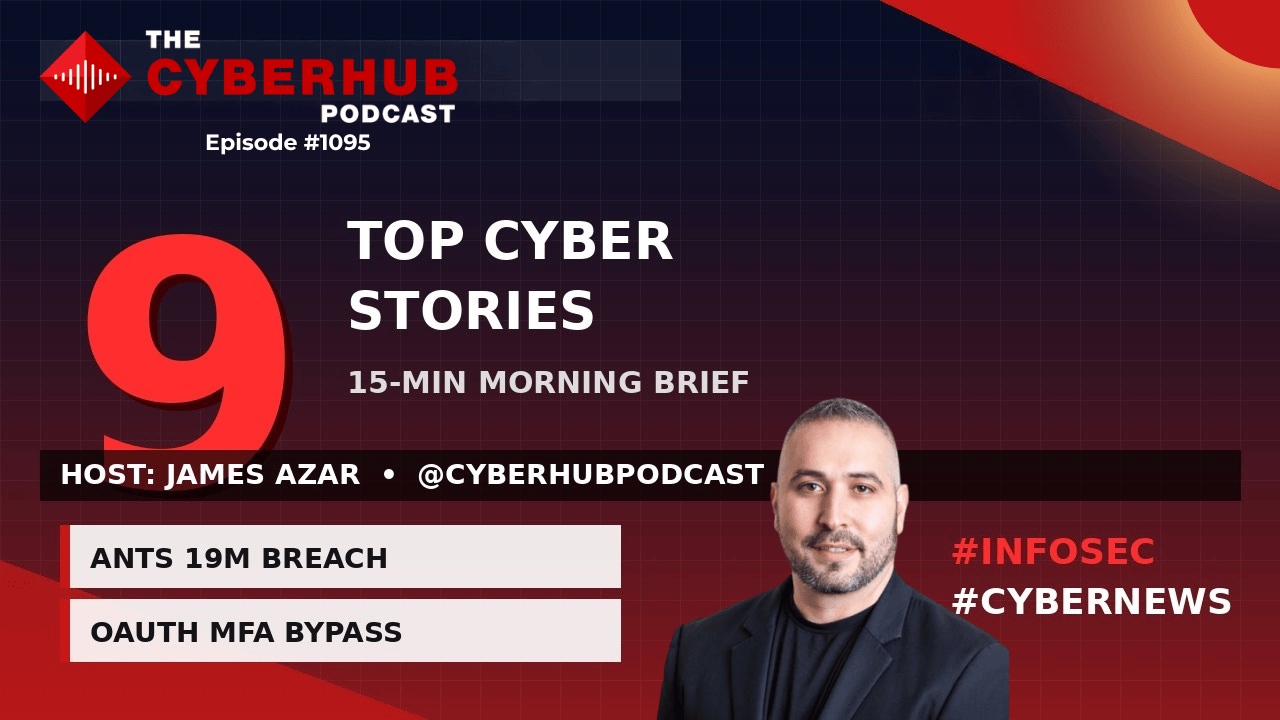
Today’s threat landscape highlights a systemic breakdown in identity, trust validation, and software supply chains. From a breach exposing millions of national identities in France to AI sandbox failures enabling root access, attackers are exploiting foundational systems that underpin authentication, execution, and trust.
At the same time, we’re seeing acceleration in automated propagation (npm worm), credential abuse (ASP.NET flaw), and stealthy persistence (APT via Outlook). Combined with large-scale patch cycles and unpatched legacy infrastructure, the result is a highly volatile environment where one weak trust layer can cascade into widespread compromise.
🇫🇷 France National ID Breach – 19 Million Records Exposed
France’s national identity agency (ANTS) confirmed a breach impacting up to 19 million individuals, exposing highly sensitive data including full names, birthdates, addresses, and civil status. This isn’t just another data breach, it’s a foundational identity dataset leak.
The real danger lies in downstream impact. With this level of data, attackers can conduct highly targeted phishing, impersonation, tax fraud, healthcare fraud, and even banking account takeovers for years to come. The French government has already warned citizens to expect smishing and phishing campaigns tied directly to this data.
From a practitioner standpoint, this is a nightmare scenario. Identity is the backbone of authentication systems, and when it’s compromised at a national level, every organization interacting with those users inherits risk.
🤖 AI Sandbox Escape – “Terium” Vulnerability Breaks Containment
A critical vulnerability in Cohere’s open-source Terium project allows sandboxed AI-generated code to escape containment and execute at the host level with root privileges.
This flaw exists in the WebAssembly layer, where improper handling of JavaScript prototypes allows attackers to pivot from a supposedly isolated environment into the underlying Node.js runtime.
This is significant because Terium is widely used to execute AI-generated code safely. With this vulnerability, there is effectively no sandbox, meaning any untrusted AI-generated script can compromise the host system, extract secrets, and move laterally.
This reinforces a growing pattern: AI infrastructure is being deployed with pre-2010 security assumptions, and attackers are catching up fast.
🪟 Microsoft ASP.NET Core Emergency Patch – Authentication Forgery Risk
Microsoft issued an out-of-band patch for a critical ASP.NET Core vulnerability that allows attackers to forge authentication cookies and elevate privileges without valid credentials.
The flaw lies in improper HMAC validation during cookie handling, effectively allowing attackers to bypass authentication entirely. No phishing, no token theft—just a forged cookie and access granted.
This is particularly dangerous for public-facing applications relying on ASP.NET Core, as it directly undermines the integrity of authentication mechanisms.
The urgency here is clear: patch immediately and rotate all data protection keys generated by vulnerable systems.
🌐 Mirai Botnets Return – Exploiting End-of-Life Routers
Two separate Mirai botnet campaigns are actively exploiting vulnerabilities in discontinued D-Link routers, which no longer receive security updates.
Attackers are leveraging command injection flaws to deploy botnet payloads, turning vulnerable devices into part of a distributed attack infrastructure.
The bigger issue here isn’t just the botnet, it’s asset visibility. Organizations often fail to inventory or retire end-of-life devices, leaving them exposed indefinitely.
These devices don’t just sit idle they become active participants in attacks.
🧬 Self-Spreading npm Worm – Supply Chain Attack Goes Autonomous
This is one of the most concerning developments of the day.
A malicious npm package targeting the widely used “pg” ecosystem includes a self-propagating worm that steals developer tokens and republishes itself across other packages.
Once it finds a valid npm token, it:
Enumerates accessible packages
Injects malicious code
Publishes new versions
Repeats the cycle
This creates a cascading effect where one compromised developer environment can infect the broader ecosystem within hours.
Even more concerning, the worm also targets PyPI, making it a cross-ecosystem supply chain attack.
This is the industrialization of software compromise.
📊 Cisco Talos IR Report – Phishing is Back at the Top
Cisco Talos’ Q1 2026 report shows phishing has re-emerged as the leading initial access vector, accounting for over one-third of incidents.
What’s changed isn’t phishing itself, it’s effectiveness. Adversary-in-the-middle kits and MFA bypass techniques have made phishing campaigns far more successful.
At the same time, exploitation of public-facing applications especially SharePoint continues to drive initial access.
The takeaway is simple: user awareness training from even a year ago is already outdated.
📧 APT Using Outlook for Command-and-Control
A sophisticated APT group is using Microsoft Outlook inboxes as a command-and-control channel.
The malware authenticates via Azure AD, accesses specific mail folders, retrieves encrypted commands from emails, executes them locally, and responds with results.
This technique leverages trusted Microsoft infrastructure, making detection extremely difficult. Traditional network filtering and reputation-based controls are ineffective because the traffic appears legitimate.
This is a prime example of living off trusted cloud services for stealthy operations.
💰 DeFi Exploit – Ownership Validation Bypassed
A DeFi platform was drained of millions after attackers exploited a flaw that incorrectly validated ownership of vault assets.
Unlike typical exploits involving private keys or reentrancy bugs, this attack manipulated logic to convince the system that the attacker was the legitimate owner.
This highlights a critical issue in decentralized finance: trust in smart contract logic is often misplaced, and small validation flaws can lead to massive financial loss.
🧱 Oracle Patch Drop – 481 Fixes Overwhelms Teams
Oracle released 481 security patches across 28 product families, one of the largest patch cycles in its history.
This comes on top of Microsoft’s patch load and emergency fixes, creating a significant operational challenge for security teams.
The risk here isn’t just vulnerability it’s patch fatigue. When teams are overwhelmed, prioritization suffers, and critical fixes can be delayed or missed entirely.
🛠️ Action Items for Security Leaders
🔐 Rotate credentials and enforce phishing-resistant MFA across all users
🧩 Patch ASP.NET Core immediately and rotate authentication keys
🤖 Isolate AI execution environments and restrict network egress
🧬 Revoke and rotate all npm and PyPI tokens across developer environments
🚫 Block malicious package versions and enforce dependency validation
🌐 Replace or isolate all end-of-life networking equipment
📧 Monitor Microsoft Graph and Outlook API activity for anomalies
🧠 Update phishing training to include MFA bypass techniques
💰 Conduct smart contract audits with focus on ownership validation logic
🧱 Prioritize patching for internet-facing and high-risk Oracle systems
🧠 James Azar’s CISOs Take
What stood out to me today is how every single story ties back to trust. Whether it’s a national identity database, an AI sandbox, a software package registry, or an authentication cookie, attackers are going after the mechanisms that define who and what is trusted. And once they compromise that, everything built on top of it becomes vulnerable.
The second takeaway is speed. The npm worm shows how quickly compromise can spread. The ASP.NET flaw shows how quickly attackers can exploit authentication. The APT using Outlook shows how long attackers can persist undetected. We are operating in an environment where time is the deciding factor and organizations that cannot detect and respond quickly will fall behind.
🔥 Stay Cyber Safe.


