
Infiltrated From Within
Why Hiring, Identity, and Trust Have Become the New Cyber Perimeter
For more than a decade, cybersecurity strategy has focused almost exclusively on keeping attackers outside the organization. We invested in firewalls, endpoint protection, identity platforms, and SOC modernization. We drew clean diagrams. We adopted Zero Trust—at least on paper.
And yet, one of the most effective adversarial campaigns in recent years did not rely on exploits, malware, or zero-days. It relied on something far simpler: getting hired.
What began as a documented North Korean state-sponsored employment fraud operation has revealed a much broader and more troubling reality. Western organizations have lost discipline around who we hire, what access we grant by default, and how much operational knowledge we expose simply because someone holds an employee badge.
This is no longer theoretical. By 2025, it became operationally undeniable.
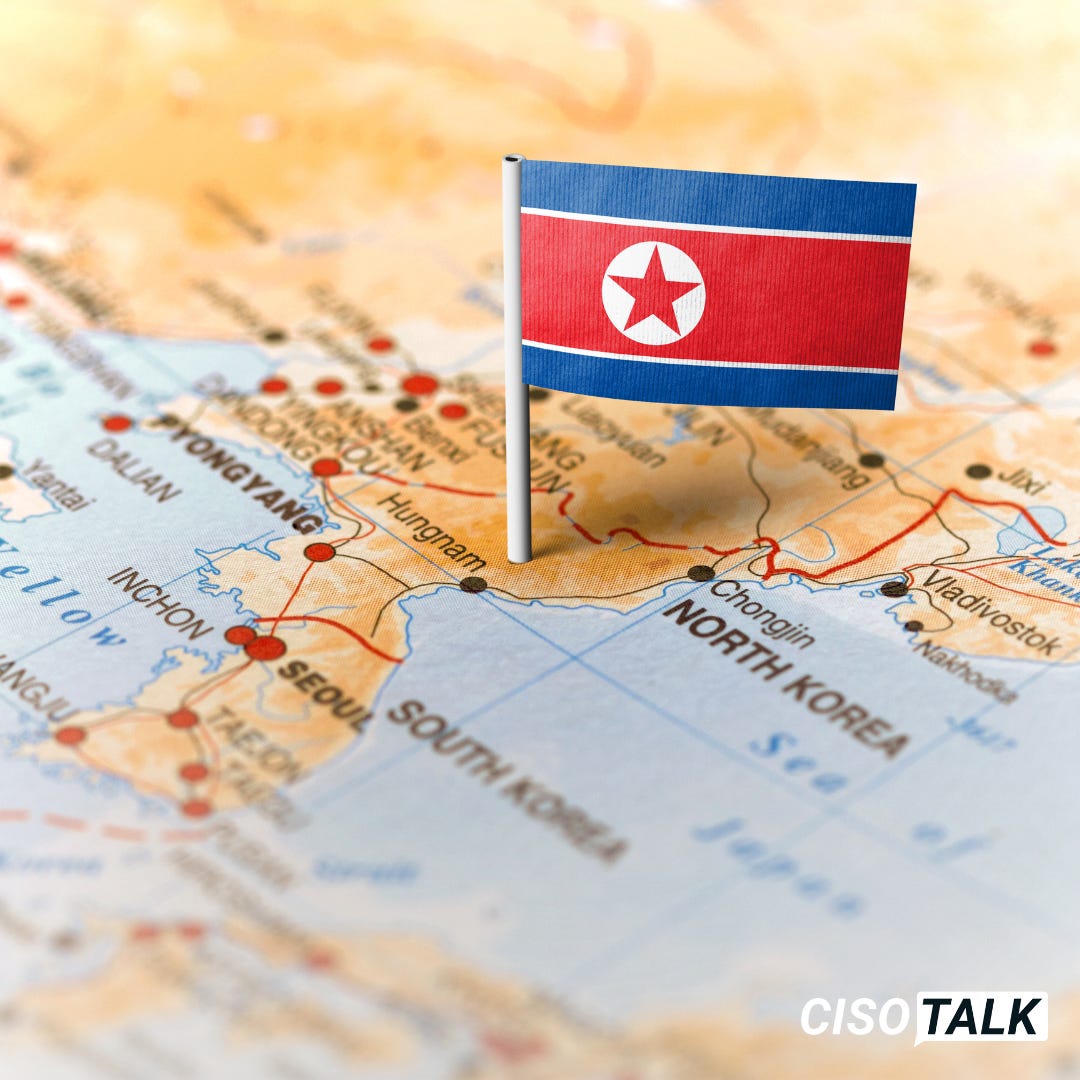
From Pyongyang to Payroll: How the North Korean IT Worker Scheme Worked
North Korea did not breach Western companies in the traditional sense. It onboarded into them.
Public disclosures and prosecutions by the Federal Bureau of Investigation, the U.S. Department of Justice, and the Cybersecurity and Infrastructure Security Agency describe a multi-year effort in which North Korean operatives used stolen or synthetic identities to secure remote IT roles across U.S. organizations. To evade detection, these workers often operated through U.S.-based facilitators who hosted company-issued laptops domestically, making activity appear local while the individuals themselves worked from sanctioned regions.
By mid-2025, this scheme had touched more than one hundred U.S. companies. Millions of dollars in wages were funneled back to the DPRK regime. Most importantly, these individuals maintained persistent, legitimate access to corporate systems without triggering alarms—because nothing about their access was technically unauthorized.
From a cybersecurity perspective, this represents a fundamental failure of assumptions. There was no intrusion event to detect. The intrusion occurred at the point of hire.
Why This Was a Cybersecurity Failure, Not an HR Mistake
Once hired, these workers did not need to escalate privileges or bypass controls. They already had what most attackers seek.
They gained visibility into internal architectures, security tooling, incident response processes, vendor dependencies, compliance constraints, and executive decision-making patterns. This is operational intelligence—arguably more valuable than raw data—and it was delivered quietly, over time, through legitimate access.
Traditional security controls were not designed to detect this behavior because the activity aligned with job responsibilities. Logs looked normal. Authentication succeeded. Access was approved. The threat lived entirely within our trust model.
That is why this cannot be framed as an HR error alone. It was a cybersecurity blind spot.
The Parallel Risk: Ideological Insider Exposure Through Institutional Openness
Alongside state-sponsored employment fraud sits a parallel issue that many institutions are reluctant to confront: access granted without sufficient scrutiny of intent.
Universities, healthcare systems, research institutions, and NGOs are structurally open environments. That openness fuels collaboration and innovation, but it also exposes institutional mechanics to individuals who may fundamentally oppose the systems they operate within.
When someone gains a role inside a major academic or medical institution—such as Emory University or similar environments—the risk is not limited to data loss. It includes understanding how governance works, where enforcement hesitates, how compliance timelines can be delayed, and how legal and transparency frameworks can be leveraged to create disruption while remaining technically within the rules.
This is not hacking. It is influence and exploitation through proximity. And cybersecurity teams are rarely included in conversations about these risks, despite the operational consequences.
2025 Made It Clear: Insider Threat Is No Longer Hypothetical
If there was any doubt left, 2025 erased it. Several insider-driven incidents became public, reinforcing the same lesson: trusted access is now one of the most exploited attack paths.
Coinbase (2025)
Coinbase disclosed that attackers bribed customer support contractors to abuse legitimate access and extract customer data, followed by extortion attempts.
Lesson: outsourced roles with broad access are part of your attack surface.
FinWise Bank (2025)
FinWise publicly warned of an insider-related data breach affecting customer information.
Lesson: excessive privilege and weak monitoring turn employees into silent breach vectors.
Federal Contractor / FOIA Systems Incident (2025)
Public reporting revealed an insider-threat event involving a contractor tied to federal data workflows, impacting sensitive operational processes.
Lesson: contractor access is not “lower risk”—it’s often higher.
U.S. Government Insider Arrest (2025)
The DOJ arrested a civilian defense employee accused of attempting to provide classified information to a foreign government.
2025 Removed All Doubt About Insider Risk
If there was any remaining skepticism, 2025 put it to rest. Multiple insider-driven incidents became public, spanning financial services, government contractors, and technology platforms.
In one widely reported case, attackers bribed customer support contractors at a major cryptocurrency platform to abuse legitimate access and extract customer data, followed by extortion attempts. In another, a regional financial institution disclosed an insider-related breach affecting sensitive customer information. Public reporting also detailed insider incidents involving federal contractors and the arrest of a U.S. government employee accused of attempting to provide classified information to a foreign government.
Across these cases, the pattern was consistent. There were no sophisticated exploits. No advanced malware. The common denominator was trusted access that was never re-evaluated.
The Structural Problem: Fragmented Ownership of Trust
These failures persist because responsibility for trust is fragmented across the enterprise.
Human Resources validates employment history but rarely assesses adversarial risk. Legal teams focus on minimizing liability, not systemic exposure. Compliance verifies requirements, not operational misuse. Security concentrates on technology. Operations optimize for speed and continuity.
No function owns institutional trust as a risk domain. Adversaries understand this gap—and they exploit it deliberately.
Author’s Perspective: Zero Trust Cannot Stop at Technology
From the CISO seat, the conclusion is unavoidable.
If we believe in Zero Trust for networks and systems but exempt hiring, access assignment, and operational visibility, we are applying the model selectively—and incorrectly.
Zero Trust was never meant to be a firewall architecture. It is a mindset. Security must work closely with HR, Legal, Compliance, Operations, and executive leadership to bring that mindset into workforce decisions.
That means stronger, role-based background checks for sensitive positions. It means continuous identity assurance rather than point-in-time vetting. It means restoring need-to-know access models, clearly defining critical roles, and applying just-in-time privileges to people, not only to service accounts.
Somewhere between labor shortages, remote-first hiring, and pressure to move fast, organizations abandoned skepticism. In doing so, we allowed the perimeter to move inward—unchecked.
Closing Thought
This is not about fear or exclusion. It is about realism.
Different actors pursue different motives—financial, ideological, strategic—but they exploit the same weakness: unquestioned trust once someone is inside.
When adversaries no longer need exploits and only need employment offers, cybersecurity must evolve beyond tools and into organizational trust architecture.
If we fail to do that, we will not simply be breached.
We will be embedded against.
☕ Coffee Cup Cheers
Trust less. Verify always. Stay cyber safe.


